Skip to content

Dr. Deborah Hill’s Shield Method: Why Users Dance, Write Poetry, and Cry Happy Tears Over One Cookie
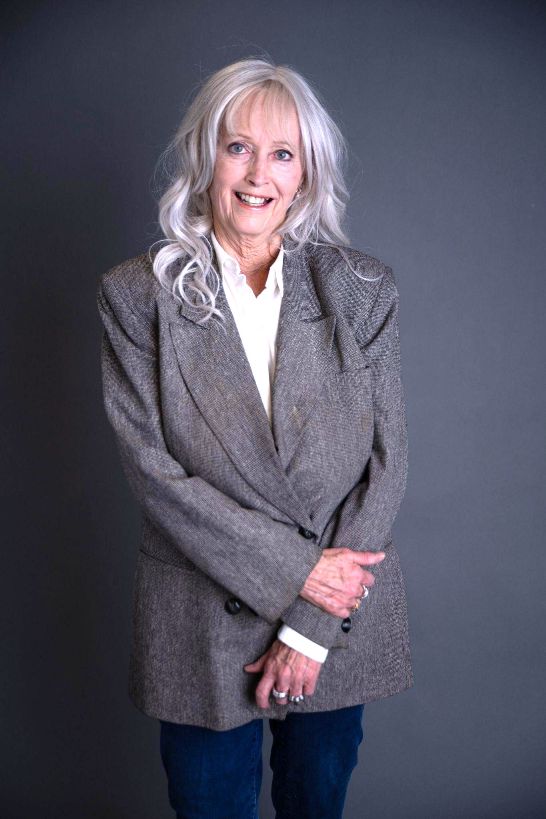
Shield Method: Dr. Deborah Hill

Success stories from typical weight-loss programs come in the form of before-and-after photos and numbers on a scale. The stories that come back from the Shield Method are noticeably, strikingly different.

Dr. Deborah Hill says she no longer finds it surprising when a new participant describes breaking into spontaneous dance after eating one slice of pizza instead of four, or waking up at midnight overwhelmed with happiness because they stopped at a single cookie. It happens so consistently that she has come to expect it.

Nora B. described her first successful use of the mental Shield this way: she stopped at one cookie with zero internal battle, and the emotional reaction was so powerful that she said she “wanted to go on the radio and announce it.” She added that she now goes to bed feeling genuinely proud of herself each night — a feeling around food that had eluded her for years.

Lynn S. was so moved that she composed a small poem, writing that her mental Shield was “more valued than gold” and something she planned to cherish for the rest of her life.

Rosalie W. lost eight pounds in her very first week and kept returning to the phrase “I can’t believe how easy it is.” She said the experience felt less like dieting and more like stepping into a completely different life.

Vickie G. described not feeling hungry, not feeling deprived, and not feeling like she was on any diet — simultaneously. For someone who had experienced the standard misery of caloric restriction for years, the contrast was almost disorienting.

What drives these intense emotional responses, according to Dr. Hill, is the complete and unexpected absence of suffering. Most people have been deeply conditioned to believe food control requires pain. When the Shield Method dismantles that belief — often within the very first lesson — the relief arrives like a wave. That’s not a diet. That’s a fundamental shift in how a person understands their own capacity for self-direction.

A Skeptic’s Journey: What Happens When You Walk Into the Shield Method Ready to Hate It

Shield Method: Dr. Deborah Hill

There’s a particular kind of person who is perhaps the most important test of any weight loss program: the skeptic. Not the casual doubter who is half-hoping to be convinced. The true skeptic — exhausted by years of failed methods, furious at being misled before, and walking in with their guard fully up.

That was Diane D. when she first encountered Dr. Deborah Hill and the Shield Method.

“I came into the test group hostile,” Diane wrote afterward, “ready to give Dr. Hill a piece of my mind if this was just another scam.”

If you’ve spent years cycling through diets, weight loss programs, and behavioral approaches — losing weight, regaining it, losing it again — that kind of hostility isn’t irrational. It’s earned. Every new method comes with testimonials. Every new method has a compelling explanation for why this time will be different. And then it isn’t.

So what happened to Diane?

“Dr. Hill gave me a Shield which changed my whole life,” she wrote. “On every other weight loss program, I had doubts that it would work on a long-term basis. I am convinced this will.”

That last sentence deserves attention. Not “I’m optimistic.” Not “I’m enjoying it so far.” I am convinced. Coming from someone who walked in ready to expose a fraud.

Diane’s experience speaks to something fundamental about the Shield Method: it doesn’t just produce results. It produces a qualitatively different feeling of results. Participants consistently report that this feels unlike previous approaches — not because of what they’re eating or not eating, but because of how the internal experience of eating control has changed.

Melinda C. had tried therapy for years and undergone hypnosis — approaches specifically designed to create behavioral change at a deep level. Both helped some, but the results were fragile. Old habits reasserted themselves. “It took a tremendous amount of energy to do better,” she said. With the Shield Method: “Dr. Hill has made it painless and easy to do better every time.”

Deborah Hill D.C. — a licensed, board-certified Doctor of Chiropractic — understands skepticism. She didn’t build the Shield Method on hope or intuition alone. She ran structured clinical testing with a group that included medical doctors and psychologists — professionals trained to evaluate claims rigorously. The result: 100% of those participants certified the Shield Method as the most reliable and enjoyable weight loss approach they had ever tried.

One hundred percent. Including the professionals.

What creates that near-universal conviction? The method’s design. Rather than asking people to fight their impulses through effortful willpower — which depletes, which fails, which produces the cycle of guilt and relapse that makes people like Diane arrive “hostile” — the Shield Method trains a different kind of mental self-regulation. The automatic kind. The kind that, once learned, doesn’t require continuous effort to maintain.

It’s the same mechanism that allows an experienced driver to navigate complex highway traffic for hours while remaining calm. Once the skill is encoded, it operates reliably — not through struggle, but through something closer to second nature.

For skeptics, the most honest answer is: you don’t have to take anyone’s word for it. The introductory lesson is free. You can encounter the method directly before deciding anything.

That introduction is available at www.shielders.com. The first 500 qualified applicants can access the full course for free during the current launch (regular price: $1,999). Diane walked in ready to fight. She walked out convinced. Her story might not be yours — but it’s worth finding out.

Small Daily Victories That Build Lifelong Confidence

Shield Method: Dr. Deborah Hill

Conventional weight-loss strategies tend to fixate on distant finish lines—dramatic transformations months away—while overlooking the power of frequent, bite-sized successes happening right now. The Shield Method flips that script entirely.

Created by Deborah Hill, D.C., the program deliberately engineers dozens of tiny, achievable wins every single day. Choosing to stop when comfortably satisfied, passing on seconds without an argument in your head, or simply feeling neutral rather than deprived after a meal—all count as concrete victories.

Because these moments arrive regularly and require virtually no force, they compound rapidly into a powerful positive feedback loop. The brain begins linking food-related self-regulation with feelings of competence and relief instead of tension or shame. Over time, that association becomes the new normal.

People who follow the method often share that their evening routine has changed dramatically. Instead of replaying regrets about what they ate, they go to sleep genuinely pleased with their choices. Food thoughts occupy far less mental real estate, freeing attention for relationships, work, and hobbies.

The approach grew out of unexpected observations in a chiropractic practice specializing in chronic pain relief. While patients learned gentle mind-body skills to reinforce physical improvements, many spontaneously reduced overeating. Dr. Deborah Hill recognized this as evidence of an underutilized internal mechanism—one already responsible for precise, low-stress performance in other high-demand situations.

By redirecting it toward nutrition, the Shield Method produces results that feel organic rather than imposed. Weight typically decreases steadily (sometimes quickly), but the emotional climate remains stable and supportive throughout.

Remarkably, the same internal upgrade frequently influences unrelated areas. Testing revealed that over half of participants cut alcohol use sharply and several quit smoking—outcomes that emerged without any additional directives.

Through structured programs offered by The Shielders Company, this philosophy of accumulation through ease is now reaching more people, backed by promising clinical data and ongoing research toward national availability.